

bean to bar to cup: a guide to the craft of drinking chocolate
a creamy dive into the most universally beloved way to enjoy good chocolate
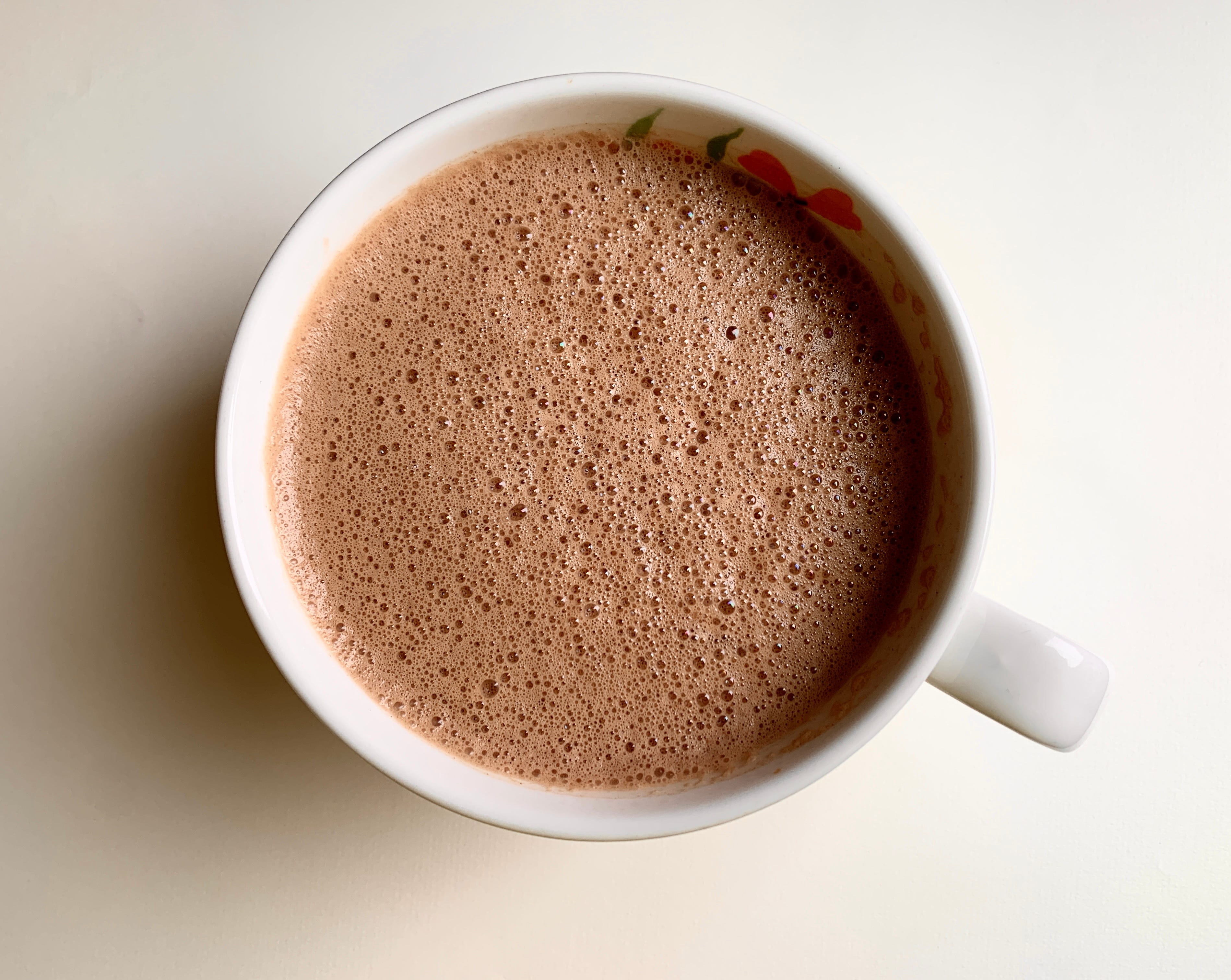
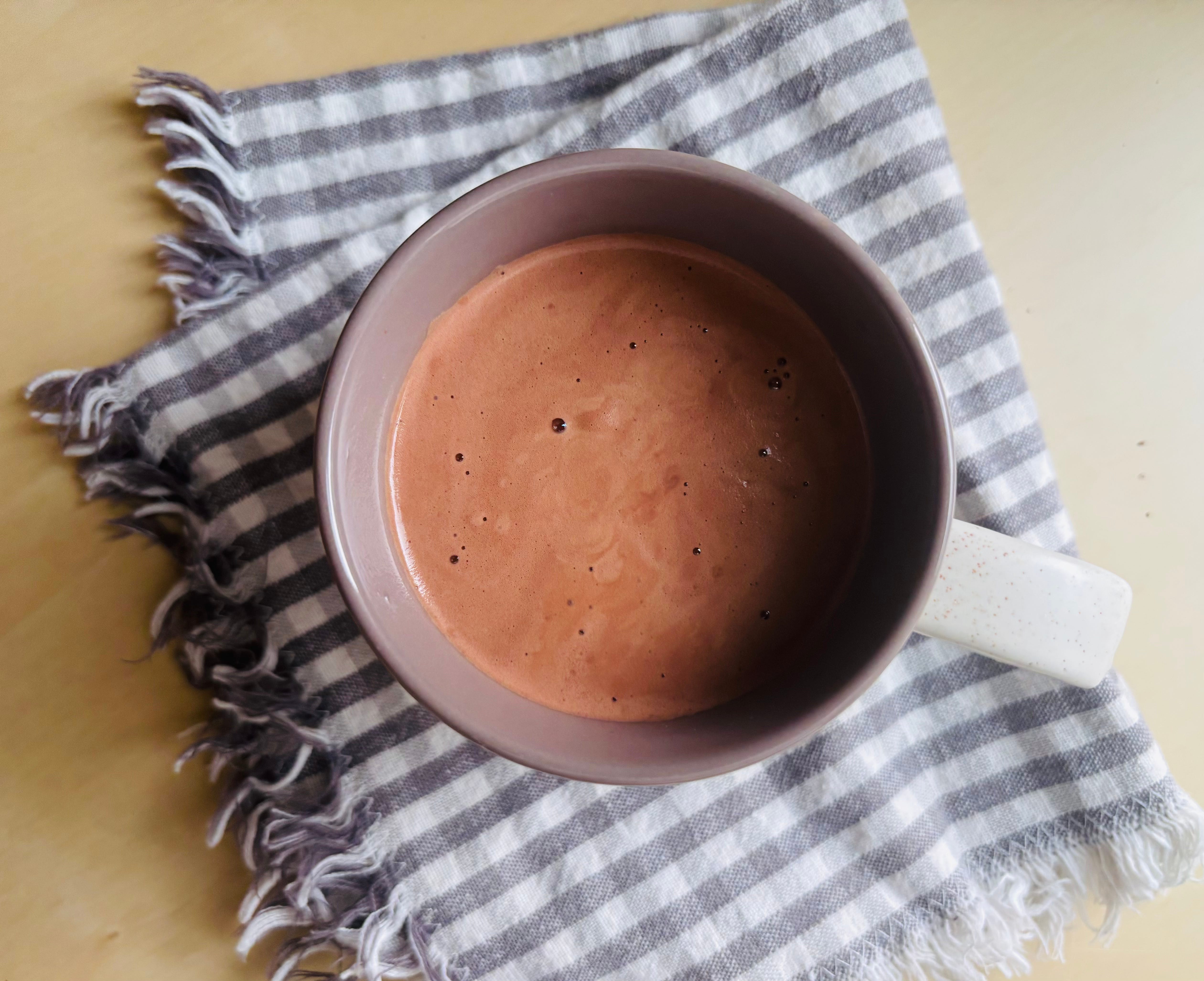
Goodbye Swiss Miss, hello good stuff
Drinking chocolate is so not Swiss Miss, those ubiquitous, dusty packets containing sugar, corn syrup, modified whey, cocoa, coconut oil, nonfat milk, salt, dipotassium phosphate, mono and diglycerides, and “natural” flavor (though, if it’s natural why can’t they name it?).
In the craft/bean to bar industry, unlike with our penchant for single origin, %-focused bars, drinking chocolate it isn’t so much as defined by what’s not in it, as by its purpose. The purpose in craft loosely means “chocolate sold to be heated with liquid and made into a warm beverage.” Yes, we are that free-spirited.
From there it varies from maker to maker, as does what it’s called. IMHO: sipping chocolate is something fancy and dainty (with that pinky finger thing going on), drinking chocolate is more thrilling than hot cocoa (something you could linger over or guzzle; no judgment here), and mix says the stuff we licked from the packets at Girl Scout camp. What it’s called = marketing. A few craft makers wax poetic:
Dick Taylor Chocolate: “A European style drinking chocolate” made from cocoa beans and cane sugar.
Fruition Chocolate Works: “Sipping Chocolate Mix” made from cocoa beans, cane sugar, cocoa powder, cocoa butter, salt, vanilla
Dandelion Chocolate: “Gourmet Classic Hot Chocolate Mix” made from cocoa beans, cane sugar.
Pump Street Chocolate: “An elegant and pure drinking chocolate” made using cocoa beans, cane sugar, cocoa butter.
Tcho: “Hawt Chocolate, formerly known as Drinking Chocolate Crumbles” made with cacaco beans, cane sugar, cocoa powder, cocoa butter, sunflower lecithin, vanilla beans.
Drinking chocolate can—and should be—more than “just chocolate” as Knoops so deliciously show us. The link is to the US online shop, which is not yet open but a drinking chocolate girl can hope, right?
As a chocolate maker crafting drinking chocolate we consider the phrase “form follows function” because “what shape it takes” determines our process, how we market it, and the user-friendliness of it. If I just lost you, and you’re thinking “but I just want to know how to make it” that is exactly where we’re headed.
Drinking chocolate is more than just chocolate melted in a cup
Like a two-ingredient dark bar, drinking chocolate can be simple, straightforward, and when crafted with intention, delightful. TBH, if it’s not delightful that’s a problem. Nowhere in chocolatelandia is memory more tied to happy, cozy, warm, comforting, snowday home from school, beach campfire (etc) memories than warm chocolate in a mug. I beg you: if you make bean to bar do not think drinking chocolate is not as worthy of your attention as your bars.
It’s that “crafted with intention” aspect that we focus on because “intention” is where we discover the freedom to pursue this craft however we each choose.
By crafting chocolate I’m of course talking about the craft approach of “starting” from scratch. We not only choose the exact ingredients we want in our batches, but face the dual tasks of impacting and enhancing the flavor of those ingredients. And, if chocolate making is a business for us, we accept the added necessity of creating a pleasurable tasting experience.
Drinking chocolate, like any chocolate we choose to make, doesn’t have to be limited to single origin dark chocolate, or take the form of bags of shredded chocolate. It MUST however, be crafted specifically as drinking chocolate. Sure, you can (and lots of makers do), chop up the same exact blocks of chocolate you use for your bars. But…why? This approach certainly makes use of “what’s available,” but Only if the answer is yes to these needs:
It tastes fabulous when melted, and diluted in hot water, milk, coffee, whatever liquid is used to make it a drinkable beverage;
The process of melting and adding/stirring into a liquid is satisfying to the user;
Since drinking chocolate is often stored and consumed gradually, it maintains its original appearance/characteristics throughout its shelf life.
You know what comes next, right? I’m going to say test different origins and %s to see which you work with taste good as drinking chocolate. By testing I do not mean sticking a spoon in the melanger and tasting warm, molten undiluted chocolate. FYI: that’s also not the most accurate way of assessing your bar batch results, either.
Why: What tastes awesome at 70% might seem too sweet as drinking chocolate, and a higher % could be used; what tastes pleasantly bitter at 90% might be too bold when experienced in a cup or mug, which provide more intense aroma (heated chocolate is more aromatic; the wider the cup/mug/bowl, the more aroma we experience), and thus, can overwhelm our ortho-nasal complex (i.e, where/how we experience “flavor” via aromatic volatile compounds).
To test: We need to mimic how the folks who buy it from us will most likely experience it. They won’t experience warm/molten from the melanger, they’ll experience it in whatever shape/form you provide: room temperature, solid chopped, shredded, grated, crumbled, cube-lets, chunks, chippy bits, discs, a dusty mix. They will then heat up some liquid, and either add the drinking chocolate to the cup or pan first, then add liquid. If the liquid is warm, the chocolate will begin to melt. If it’s cool, it will float and require more stirring.
This is why form matters: Form is what shape we choose to make our drinking chocolate, + the recipe we choose to create texture and flavor. Form is the experience we want the consumer of it to have. Dick Taylor calls their’s “European style” likely because they use an intense origin, and the marketing language encourages enjoying a small, thicker amount.
To re-cap, our maker goals for drinking chocolate:
Craft great flavor,
with a pleasing texture,
in a form chosen intentionally for the experience we hope to create.
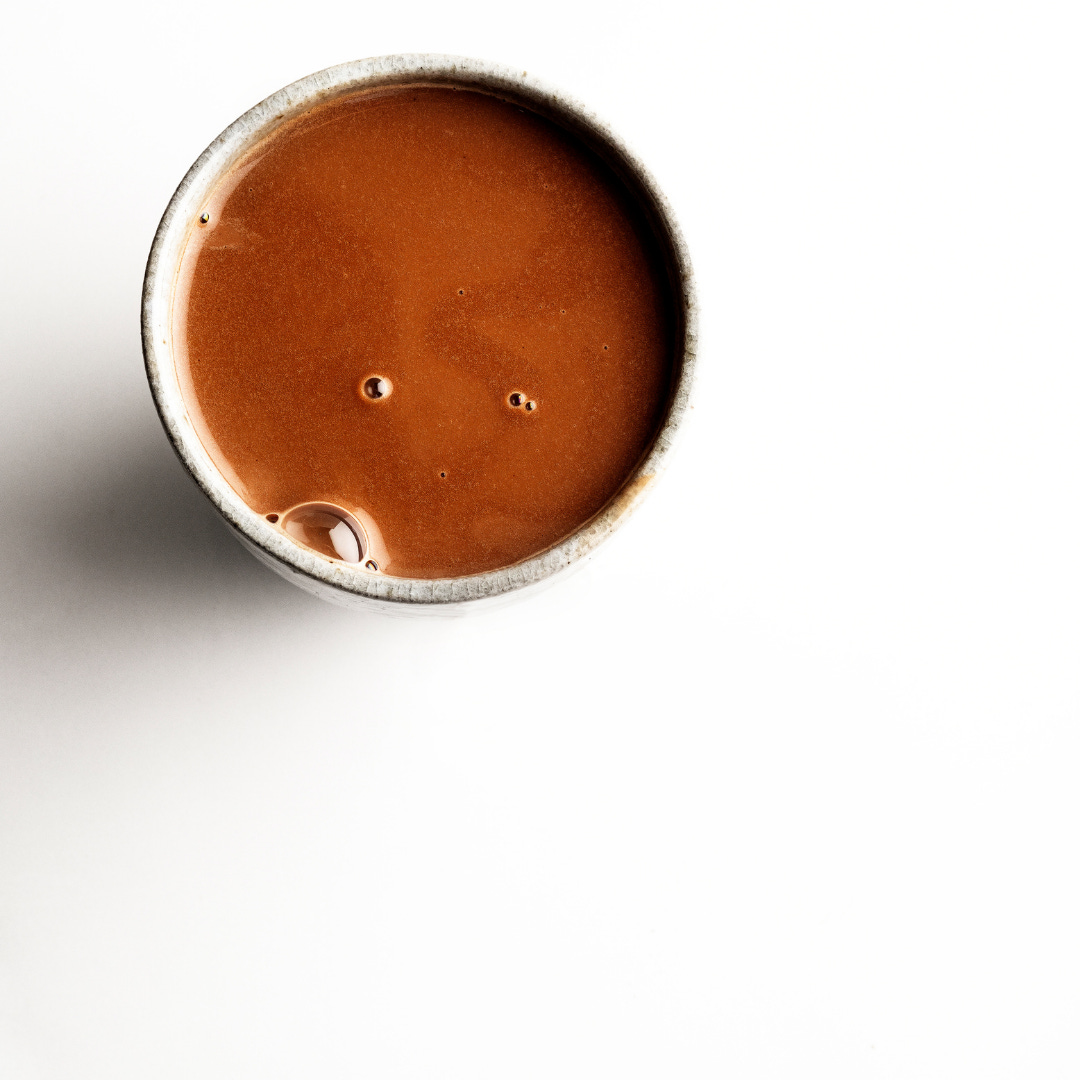
There are valuable lessons in chocolate making that drinking chocolate can teach us.
Drinking chocolate is more aromatic than a bar of chocolate, therefore it translates origin flavor in a bolder way;
Overheating destroys aroma;
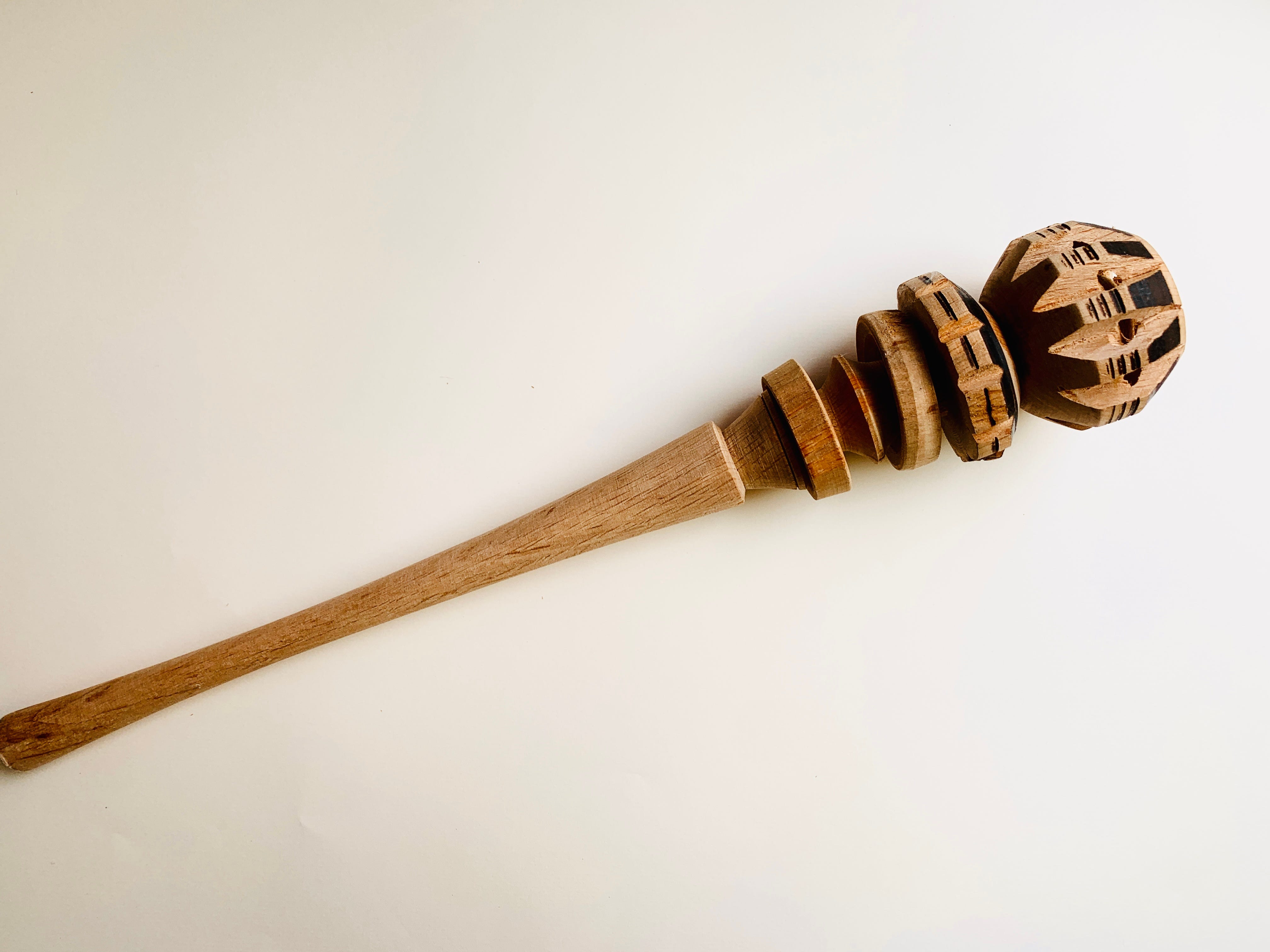
The more air we mix in, the smoother and creamier the result. This is 100% what a molinillo does! whips in air and froths the chocolate. Also, a Velvetizer (my fav appliance ever).


How these lessons, applied to chocolate making, can guide us:
If we are having a hard time with an origin and/or %, instead of tasting from the melanger we can “make a cup of drinking chocolate” with it. Experiencing it diluted may shed light on specific flavor notes. Not the same as using the cupping technique, but along the same principles.
Paying attention to refining/conching time is not just about making sure we don’t over-refine, but that we don’t lose aromatic volatiles that create flavor.
Likewise, air mixed in minus friction is our friend, and we really do need to imitate conching as best we can, even without an actual/separate conche; in a small tabletop refiner we need to back off the tension knob as soon as we’ve achieved silky texture (this means no hint of siltiness etc; if you are just learning yes, a grindometer helps but ideally continue training the sensitivity of your tongue), and if possible apply extreior heat + time. Sadly, the new stainless scraper blades don’t seem to aerate as well as the old style plastic paddle blades, as they are on the side of the flow, not “in” the flow. In a DCM20 we can blissfully enjoy the heat produced by the direct-drive, and remove all the tension.
How to make drinking chocolate, the basics
Like a bar of chocolate, it starts with choosing origin, pairing the % you want to use to help create the end experience, and having a plan for “what happens after batchcrafting.”
Batchcrafting
For dark, dark milk drinking chocolate or classic milk chocolate (these can be plant-based or dairy), the bean to bar process is used: beans are chosen, sorted, roasted, cracked and winnowed into nibs, then a % formulation is used to determine the ratio of the ingredients we plan to use. The batchcrafting process doesn’t change for drinking chocolate: refine as long as necessary to achieve texture and flavor, without over-refining and ending up with fudgy/gummy chocolate.
Pro-tip: if you do over-refine (ever) the batch is not lost. This of course is wholly a texture issue I’m talking about; if the taste is not optimal, that’s another matter. If minimally over-refined, make a batch the same size and then blend. Increase the “new, not-screwed-up” batch size proportionally to how thick/over-refined the first batch was: meaning, you can double batch and then blend, or 3x batch and blend.
The form we offer IS as much of the experience as the texture and flavor.
Chopped is usually the starting-point for small makers, but takes a lot of time. After batchcrafting, this works best if the chocolate is strained, tempered, then poured as thin slabs for easy cutting before chopping. Tempering raises the melting point of chocolate, makes the chocolate easier to chop, helps maintain the suspension of particles, and creates a uniform melt. If tempering with seed: do not over-seed, as that = very rigid chocolate.
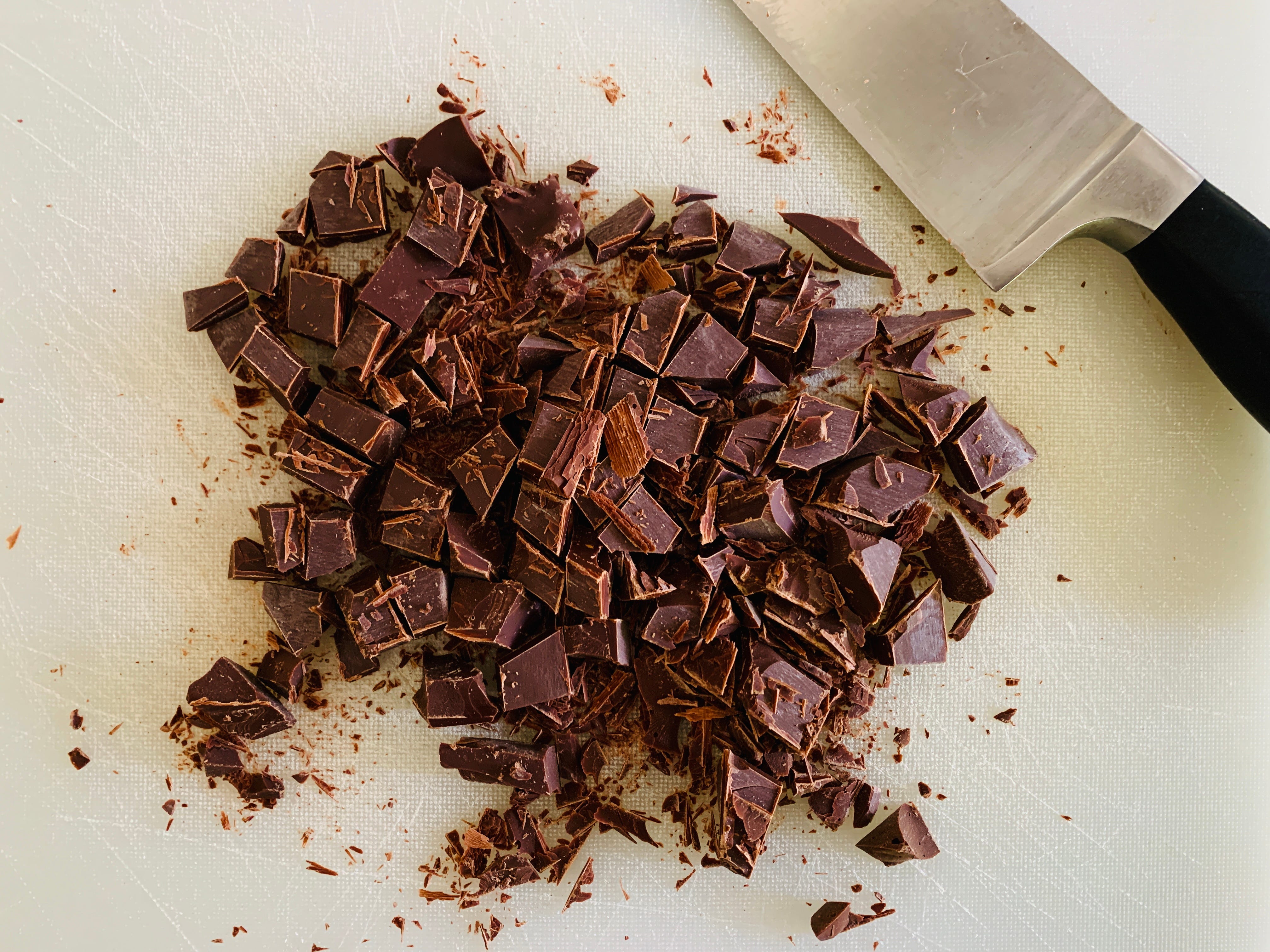
Shredded Is commonly used in craft chocolate: once we get serious about producing more than a few pounds, we will want to forget trying to hand chop. While a food processor can handle a small amount, they are prone to motor burnout and can melt the shredded bits. A Robot Coupe is the answer. The high cost = time saved. After batchcrafting: chocolate is strained, tempered, then poured as slabs for easy cutting before feeding into Robot Coupe. Tempering raises the melting point of chocolate, helps maintain the suspension of particles, and creates a uniform melt. I have heard that some makers are using ice choppers? But I haven’t personally tried this. If you have, I’d love to hear your thoughts.


Traditonal discs, and not-so-traditional tablets Round discs that can be chopped or grated by the consumer offer a whole other experience. In fact, unlike shredded drinking chocolate, the chocolate can be used for snacking, or even chopping for baking. At Map Chocolate I riffed on this notion with a modern mould. After batchcrafting the chocolate is strained, tempered, then moulded. Moulding requires tempering, as moulded chocolate releases cleanly from moulds, and as before, raises the melting point of chocolate, helps maintain the suspension of particles, and creates a uniform melt.


Cubelets or small, square-ish shapes also offer more possibilities for the consumer: baking and snacking, not just melting. After batchcrafting the chocolate is strained, tempered, then poured into cube trays, cooled, then unmoulded. As with the tablets, moulding requires tempering, as moulded chocolate releases cleanly from moulds, and as before, raises the melting point of chocolate, helps maintain the suspension of particles, and creates a uniform melt.


Blends and mixes
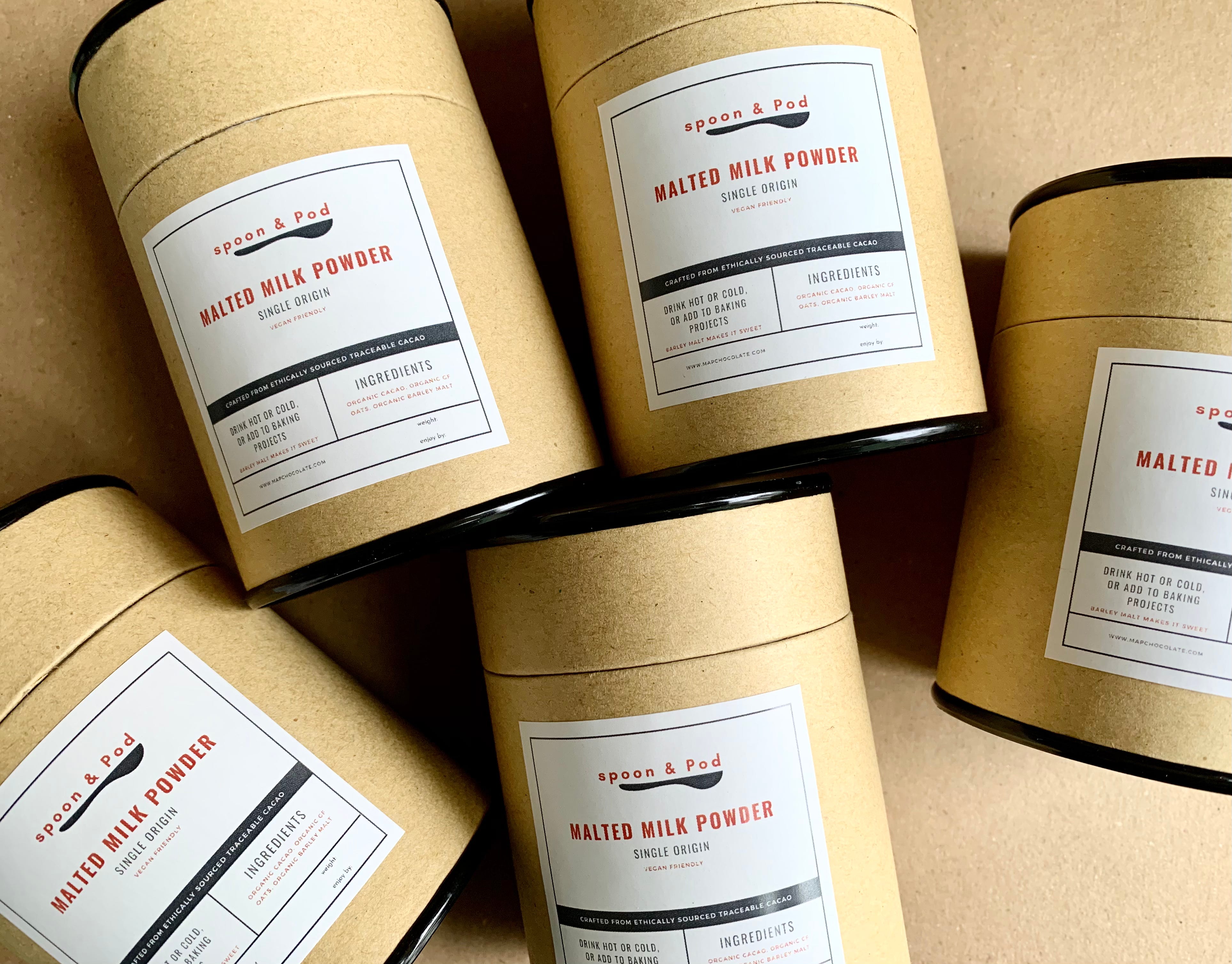
Closer to traditional packet hot cocoa, but when made craft bean to bar can be something much more special. Typically a mixture of chocolate and/or cocoa powder, plus milk powder or alt-milk powder (like oat powder, etc), plus sugar (maple, date, cane, etc). Can be mixed in a food processor or Robot Coupe. Not necessary to temper is a plus/time saver.
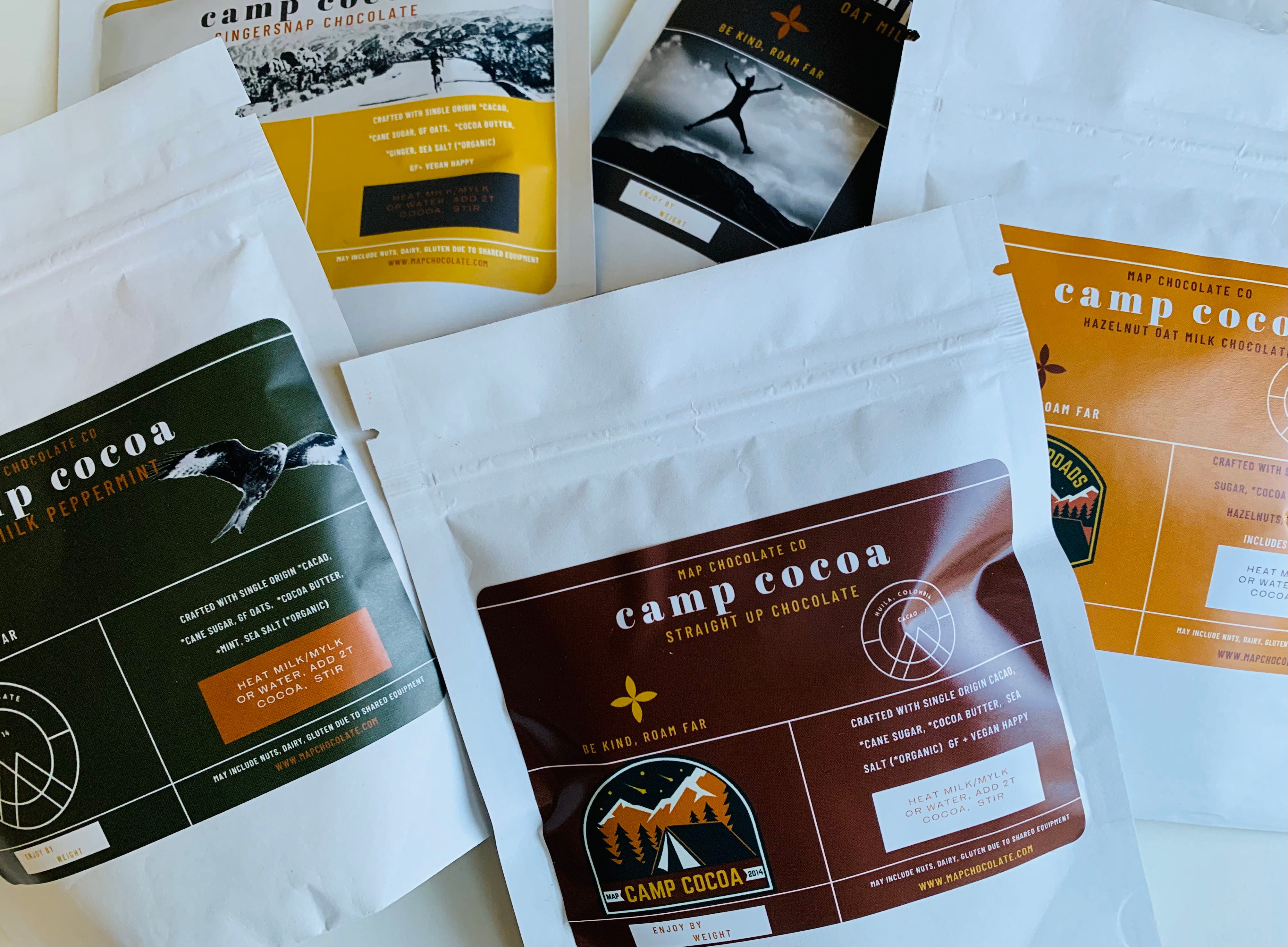
Packaging trends
Pouches (above) are easy, and can be heat-sealed. Cannisters, tubes, and cans are becoming more popular, but have specific shipping needs (boxes) unlike pouches, which can be shipped via padded envelope.
Okay, have at it!
The molinillo!!! Love it!!
The first time I ever had drinking chocolate in the US was at a Vosges Chocolate retail store in Chicago. They had three options, and they all sounded interesting, so of course I ordered the tasting trio. (see attached link) It was such a memorable experience because the flavor of the chocolate itself (dark milk, and white ) was enhanced with ingredients I never had added to "hot chocolate" That was over 20 years ago and I still remember it. Love seeing fun flavors like strawberry horchata and Camp Cocoa gingersnap in your post. Hope to see more craft chocolate makers offer drinking chocolates. https://www.vosgeschocolate.com/products/holiday-drinking-chocolate-trio-la-parisienne-aztec-bianca-gift-set?srsltid=AfmBOooTKgmISzb1V9a9UlLvEz-0dYo5WjaDs85x62-k5WE56EknTX2h